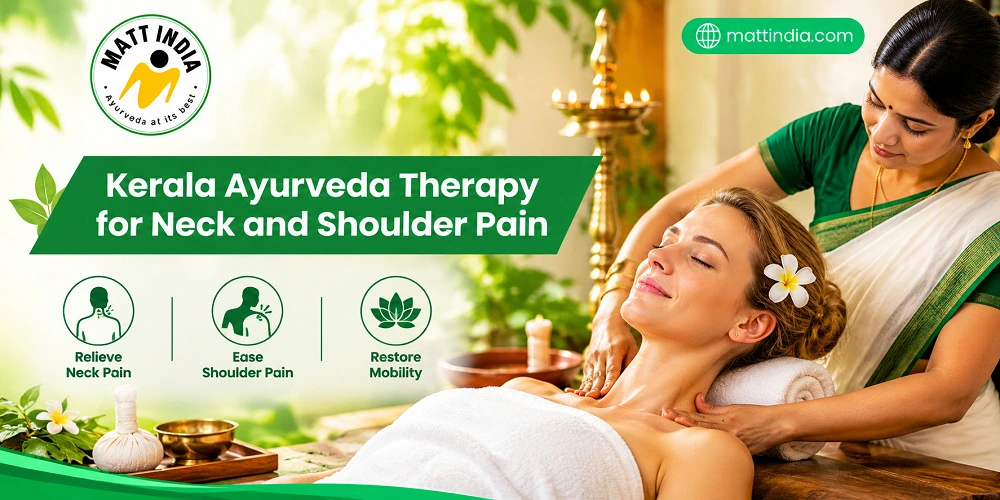
Kerala Ayurveda Therapy for Neck and Shoulder Pain. Neck and shoulder pain can make even simple daily activities uncomfortable. Long hours at a desk, poor posture, heavy lifting, stress and limited movement can all contribute to muscle tension and stiffness. For many people, the discomfort affects sleep, work and overall quality of life. Kerala Ayurveda therapy for neck and shoulder pain offers a traditional wellness approach that focuses on relaxation, gentle therapies and better body movement.
At MATT INDIA AYURVEDA, Ayurveda-based care can help people explore traditional methods for managing muscular discomfort. Depending on individual needs, an Ayurvedic practitioner may recommend oil applications, massage techniques, heat therapies and lifestyle guidance. The aim is to support comfort and mobility while considering the person's overall health.
Common Causes of Neck and Shoulder Pain
Neck and shoulder discomfort can develop for several reasons. Sometimes, it starts gradually after repeated strain. In other cases, an injury or an underlying medical condition causes the pain.
Common contributing factors include:
Poor posture: Sitting with a bent neck or rounded shoulders can strain surrounding muscles.
Long screen time: Looking down at phones and laptops for extended periods may increase neck tension.
Muscle overuse: Repeated lifting, carrying or physical work can cause soreness.
Stress: Emotional pressure may contribute to tightness around the neck and upper back.
Lack of movement: Staying in one position for too long can make muscles feel stiff.
Sleep position: An unsuitable pillow or sleeping posture may cause morning discomfort.
Therefore, understanding the possible cause helps a practitioner recommend suitable care. Persistent, severe or unexplained pain needs medical assessment rather than massage alone.
How Kerala Ayurveda Approaches Neck and Shoulder Discomfort
Ayurveda considers physical comfort, daily habits and individual constitution when planning wellness care. Traditional Ayurvedic practitioners may assess the person's symptoms, activity levels and general health before suggesting therapies.
In Ayurvedic practice, some conditions involving stiffness and discomfort are discussed in relation to Vata imbalance. However, this traditional explanation does not replace a modern medical diagnosis. Instead, it provides a framework that practitioners may use when selecting traditional treatments.
Furthermore, Kerala has a long-standing tradition of Ayurvedic therapies, including specialised oil applications and massage practices. These treatments aim to promote relaxation, support comfortable movement and improve the overall wellness experience.
Popular Kerala Ayurveda Therapies for Neck and Shoulder Pain
A qualified practitioner may select one or more therapies based on the person's condition. Not every treatment suits everyone, so an individual assessment matters.
1. Abhyanga – Traditional Ayurvedic Oil Massage
Abhyanga is a traditional Ayurvedic massage that uses herbal oils and gentle, planned movements. A practitioner may apply the oil to the neck, shoulders and surrounding areas, depending on the person's needs.
The massage can help relax tense muscles and create a sense of comfort. Additionally, the warmth and gentle touch may support relaxation after a tiring day. Practitioners choose oils according to their assessment rather than using one oil for every person.
2. Pizhichil – Warm Oil Therapy
Pizhichil is a traditional Kerala therapy in which warm medicated oil flows over the body while trained therapists use coordinated movements. It forms part of some specialised Ayurvedic wellness programmes.
Depending on the individual's health and suitability, a practitioner may consider this therapy as part of a broader relaxation plan. However, it requires professional supervision and may not suit people with certain medical conditions.
3. Greeva Basti – Localised Neck Oil Treatment
Greeva Basti is a traditional localised treatment for the neck region. The therapist creates a small dough boundary around the treatment area and fills it with comfortably warm medicated oil for a set period.
This therapy focuses on the neck area and may form part of an individual Ayurvedic care plan. The practitioner controls the oil temperature and treatment duration to maintain comfort and safety.
4. Patra Pinda Sweda – Herbal Leaf Bolus Therapy
Patra Pinda Sweda uses warm herbal leaves prepared in a bolus or bundle. A trained therapist applies the warm bundle using controlled movements over selected body areas.
Traditionally, practitioners use this treatment to address stiffness and muscular discomfort. Nevertheless, the therapist must check skin sensitivity and temperature tolerance before starting.
Related Articles:
» Abhyanga Massage in Kerala: Benefits for International Tourists
» Ayurveda Rejuvenation Therapy in Kerala: Treatments and Benefits
» How Abhyanga Helps Reduce Stress and Fatigue
» Ayurveda Rejuvenation Therapy: Benefits, Treatments, and Healing Process
» Ayurvedic Secrets to Overcoming Anxiety and Stress Naturally
Benefits of Ayurvedic Therapy for Neck and Shoulder Pain
When a practitioner selects suitable treatments, an Ayurvedic wellness programme may offer several supportive benefits. The experience varies from person to person, and results depend on the cause and severity of the discomfort.
Potential benefits include:
Muscle relaxation: Gentle massage may help ease feelings of tightness after everyday activity.
Improved comfort: Warm oil applications can create a soothing experience for tired muscles.
Better movement: Relaxation and gentle movement may help people feel less restricted by mild stiffness.
Stress reduction: A calm treatment environment can support relaxation and general well-being.
Personalised care: Practitioners can adapt traditional therapies to individual needs and comfort levels.
However, Ayurveda should not replace medical care for nerve problems, serious injuries or persistent pain. Instead, people can discuss complementary therapies with their healthcare professional.
What to Expect During an Ayurvedic Treatment Session
An Ayurvedic session usually begins with a consultation. The practitioner asks about the location of the pain, how long it has lasted and which activities make it worse. They may also discuss previous injuries, existing health conditions, allergies and current medication.
Next, the practitioner recommends suitable therapies. For example, one person may receive a gentle oil massage, while another may need a different approach. The therapist should explain the process, oil selection, expected duration and possible precautions before treatment begins.
During the session, always communicate if you feel discomfort, burning or unusual pain. In addition, tell the practitioner about sensitive skin or any reaction to herbal oils. A professional should adjust or stop the treatment when necessary.
Simple Daily Habits to Support Neck and Shoulder Health
Ayurvedic treatments work best as part of a sensible daily wellness routine. Small changes can also help reduce repeated strain.
Daily habit | How it may help |
|---|---|
Maintain good posture | Reduces unnecessary strain during desk work |
Take screen breaks | Limits long periods of fixed neck positioning |
Stretch gently | Helps maintain comfortable movement |
Adjust your workstation | Keeps screens and chairs at suitable heights |
Choose a supportive pillow | Helps maintain a comfortable sleeping position |
Manage daily stress | Encourages relaxation and healthy routines |
Furthermore, avoid sudden neck movements and heavy lifting when the area feels painful. Gentle activity may be suitable for some people, but stop any movement that increases discomfort. A physiotherapist or healthcare professional can suggest appropriate exercises.
Who Should Consider Kerala Ayurveda Therapy?
Adults experiencing mild muscular tightness or everyday neck and shoulder tension may wish to discuss Ayurvedic therapies with a qualified practitioner. People who spend long hours working at computers may also explore these treatments as part of a wider wellness routine.
Nevertheless, some symptoms need prompt medical attention. Seek urgent care if neck pain follows a serious accident or comes with chest pain, breathing difficulty, sudden weakness, numbness, severe headache, fever or loss of coordination. Also, consult a healthcare professional if the pain persists, worsens or travels down the arm.
Experience Traditional Ayurveda at MATT INDIA AYURVEDA
Choosing the right therapy requires more than selecting an oil massage. It involves understanding your symptoms, health history and treatment goals. At MATT INDIA AYURVEDA, individuals can explore traditional Kerala Ayurveda practices under professional guidance.
A personalised approach helps practitioners consider suitable therapies, comfort levels and relevant precautions. Along with treatment, healthy posture, regular movement and proper rest can support everyday well-being.
If neck and shoulder discomfort affects your routine, seek a proper assessment before starting treatment. With informed guidance, Kerala Ayurveda therapy may become a supportive part of your broader wellness plan.
Conclusion
Kerala Ayurveda therapy for neck and shoulder pain offers a traditional approach to relaxation and muscular comfort through treatments such as Abhyanga, Greeva Basti and Pizhichil. Along with suitable therapies, good posture, gentle movement and proper rest can support everyday well-being. At MATT INDIA AYURVEDA, individuals can explore personalised Ayurvedic care under professional guidance. Choose the right treatment after understanding your symptoms and health needs, and seek medical advice for persistent or severe pain.
Social:
https://in.pinterest.com/pin/395261304821321327/
https://x.com/matt_india/status/2118232790743564598
https://www.linkedin.com/feed/update/urn:li:activity:7523999536701362176/
https://www.linkedin.com/feed/update/urn:li:share:7523999884904026112/

No comments:
Post a Comment