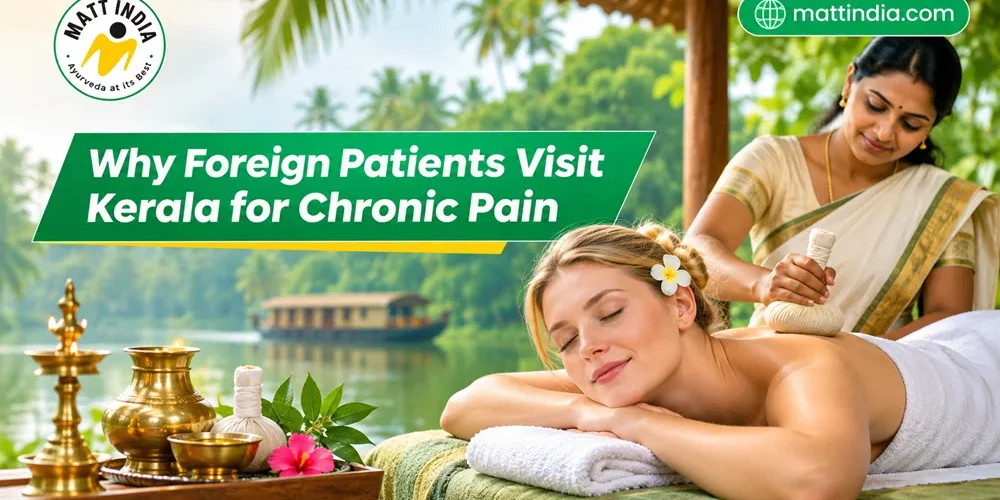
Why Foreign Patients Visit Kerala for Chronic Pain Relief. Chronic pain can affect almost every part of daily life. It may disturb sleep, limit movement, reduce work productivity and make simple activities difficult. For people who have lived with persistent back pain, joint stiffness, muscle discomfort or other long-term pain conditions, finding the right support becomes a priority.
In recent years, many international visitors have started exploring Kerala for chronic pain relief through Ayurveda and traditional wellness programmes. Kerala attracts foreign patients with its long-standing Ayurvedic heritage, experienced practitioners, personalised therapies and peaceful surroundings. In addition, the state offers opportunities to combine traditional wellness practices with a relaxing recovery-focused stay.
At MATT INDIA AYURVEDA, visitors can explore Ayurveda-based wellness approaches that focus on individual needs, daily habits and overall well-being.
Why Is Kerala a Popular Destination for Chronic Pain Treatment?
Kerala has a strong connection with Ayurveda, an Indian system of traditional medicine that has developed over thousands of years. The state has established Ayurvedic centres, trained practitioners and wellness facilities that welcome visitors from different countries.
Foreign patients often choose Kerala because they want more than a short appointment. Instead, they may prefer a planned wellness stay that includes consultations, traditional therapies, suitable meals and rest.
Furthermore, Kerala offers a natural setting that supports a calmer travel experience. Its greenery, backwaters, coastal areas and quiet retreat locations appeal to people who want time away from demanding routines.
However, Ayurveda does not guarantee a cure for chronic pain. Results vary, and patients should discuss treatment options with qualified healthcare professionals before beginning any programme.
1. Traditional Ayurvedic Therapies for Chronic Pain
One major reason international visitors travel to Kerala is access to traditional Ayurvedic therapies. Practitioners may recommend different procedures depending on the person's health history, physical condition and wellness goals.
Some commonly used therapies include:
Abhyanga – Traditional Ayurvedic Oil Massage
Abhyanga involves applying warm herbal oils through a traditional massage technique. Practitioners may use it as part of a wellness programme to support relaxation and ease muscular tension.
Additionally, the type of oil and massage approach may differ according to individual assessment.
Kizhi – Herbal Compress Therapy
Kizhi therapy uses herbal powders, leaves or other selected ingredients wrapped in cloth bundles. Practitioners warm these bundles and apply them to specific body areas.
This traditional procedure may form part of a programme designed around stiffness, muscle discomfort and relaxation.
Pizhichil – Warm Oil Therapy
Pizhichil involves the controlled application of warm herbal oil over the body. It is traditionally associated with Kerala Ayurveda and may be included in selected wellness programmes.
The practitioner decides whether this therapy is appropriate after reviewing the patient's condition.
Dhara – Continuous Liquid Application
Dhara therapy involves the steady pouring of a selected liquid, often oil or another traditional preparation, over a particular area of the body. Some centres also offer variations such as Shirodhara.
It may support relaxation and a calming wellness experience.
Basti – Traditional Ayurvedic Procedure
Basti is a specialised Ayurvedic procedure that uses herbal preparations through a prescribed method. It requires professional assessment and should only take place under qualified supervision.
Not every patient needs every therapy. Therefore, a personalised treatment plan matters more than choosing procedures based on popularity.
2. Personalised Ayurvedic Consultation and Treatment Plans
Chronic pain does not affect everyone in the same way. One person may experience lower back discomfort, while another may struggle with knee stiffness or recurring neck tension. Similarly, age, lifestyle, work habits and medical history can influence the person's experience.
For this reason, Ayurvedic centres usually begin with an individual consultation. Practitioners may discuss:
The location and duration of pain
Previous injuries or medical conditions
Daily activity and exercise habits
Sleep quality and stress levels
Food preferences and digestion
Current medication and ongoing treatment
After the assessment, the practitioner may suggest suitable therapies, dietary guidance and daily routines.
Moreover, international patients should share their existing medical reports and prescriptions. This helps practitioners understand the person's background and identify situations that require additional medical advice.
3. Support for Different Types of Chronic Pain
Foreign visitors may explore Ayurvedic wellness programmes for several types of persistent discomfort. Nevertheless, the suitability of each programme depends on a proper assessment.
Pain concern | Possible Ayurvedic wellness approach |
|---|---|
Chronic back discomfort | Individual assessment and selected oil therapies |
Knee and joint stiffness | Gentle therapies and movement guidance |
Neck and shoulder tension | Relaxation-focused massage approaches |
Muscle tightness | Selected herbal compress therapies |
General body discomfort | Personalised wellness routine |
Stress-related muscle tension | Relaxation and lifestyle support |
These approaches should not replace appropriate medical treatment. For example, persistent joint pain may require a diagnosis to identify arthritis, injury or another underlying condition.
In addition, sudden severe pain, unexplained swelling, fever, weakness or loss of bladder or bowel control needs prompt medical attention.
Related Articles:
» Abhyanga Massage in Kerala: Benefits for International Tourists
» Ayurveda Rejuvenation Therapy in Kerala: Treatments and Benefits
» How Abhyanga Helps Reduce Stress and Fatigue
» Ayurveda Rejuvenation Therapy: Benefits, Treatments, and Healing Process
» Ayurvedic Secrets to Overcoming Anxiety and Stress Naturally
4. A Peaceful Environment for Recovery and Relaxation
Kerala's natural surroundings are another attraction for international wellness travellers. Compared with a busy city break, a stay at a suitable wellness centre may provide a quieter routine.
Visitors can enjoy green landscapes, fresh air and a slower daily schedule. Furthermore, many wellness programmes encourage regular sleep, balanced meals and time for relaxation.
Although the environment cannot independently treat a medical condition, it may help visitors take a break from everyday pressures. This can make the overall wellness experience more comfortable.
5. Ayurvedic Diet and Lifestyle Guidance
Food and daily habits form an important part of many Ayurvedic programmes. Instead of following one fixed diet, practitioners may suggest meals based on individual needs and traditional Ayurvedic principles.
A wellness routine may include:
Freshly prepared meals with suitable ingredients
Regular meal timings
Adequate hydration
Gentle physical activity, where appropriate
Consistent sleep habits
Relaxation practices
Additionally, some centres may provide guidance on yoga, breathing exercises or meditation.
Foreign patients should inform the centre about allergies, food restrictions, diabetes, kidney conditions and other relevant health concerns. They should also avoid stopping prescribed medicines or making major dietary changes without medical advice.
6. Affordable Wellness Packages Compared with Overseas Options
Treatment expenses can influence a patient's decision to travel abroad. Kerala may offer different price ranges depending on the centre, accommodation, therapies and programme duration.
However, patients should compare complete package costs rather than focusing only on the advertised therapy price.
Expense category | What patients should check |
|---|---|
Initial consultation | Practitioner fees and assessment charges |
Therapy sessions | Number, type and duration of procedures |
Accommodation | Room category and length of stay |
Meals | Whether prescribed meals are included |
Medicines | Cost of oils and herbal preparations |
Additional services | Yoga, transport and follow-up consultations |
There is no single standard price for chronic pain wellness programmes across Kerala. Therefore, request a written quotation before confirming a booking.
Also, calculate flights, visas, local transport, travel insurance and possible additional medical expenses. A lower package price does not always mean a lower overall travel cost.
7. Why Foreign Patients Prefer an Extended Wellness Stay
A short visit may not provide enough time for a complete consultation-led wellness programme. Consequently, some international visitors plan longer stays based on professional recommendations.
An extended visit may allow time for an initial assessment, selected therapies, rest and progress reviews. Nevertheless, the ideal duration depends on the person's health condition and the practitioner's advice.
Before travelling, patients should confirm:
The centre's registration and practitioner qualifications
The exact therapies included in the programme
Whether the centre can accommodate existing medical needs
The availability of emergency medical support
Accommodation and food arrangements
Follow-up options after returning home
These checks help visitors make informed decisions and avoid unrealistic expectations.
8. Combining Ayurveda with Responsible Medical Care
People living with chronic pain may already receive treatment from doctors, physiotherapists or pain specialists. Therefore, they should approach Ayurveda as a complementary wellness option rather than an automatic replacement for conventional healthcare.
For example, a person with diagnosed arthritis should continue discussing disease management with their treating doctor. Similarly, someone recovering from surgery needs medical clearance before receiving massage or heat-based therapies.
Furthermore, some herbal products can interact with prescription medicines or contain ingredients that require caution. Patients should disclose every medicine and supplement they use.
A responsible centre should explain possible benefits, limitations and risks clearly. It should also refer patients for medical evaluation when necessary.
Why Choose MATT INDIA AYURVEDA?
Choosing the right Ayurvedic centre is an important part of planning a wellness journey. MATT INDIA AYURVEDA welcomes people interested in understanding traditional Ayurvedic approaches and exploring personalised wellness options.
A suitable programme should begin with a discussion about individual needs rather than a fixed package for everyone. It should also explain the purpose of each recommended therapy, expected costs and relevant precautions.
Whether you are exploring traditional oil therapies, herbal compresses or lifestyle guidance, seek professional advice before making a decision. Most importantly, maintain realistic expectations and keep your regular medical team informed.
Conclusion
Kerala attracts foreign patients seeking chronic pain relief through Ayurveda because of its traditional therapies, experienced practitioners, personalised wellness approaches and peaceful environment. From Abhyanga and Kizhi to dietary guidance and relaxation practices, the state offers several options for people interested in traditional wellness.
However, chronic pain requires careful assessment, and no therapy can promise the same results for everyone. By choosing a responsible Ayurvedic centre, sharing medical information and maintaining appropriate medical care, international visitors can make better decisions about their wellness journey.
Social:
https://in.pinterest.com/pin/395261304821328697/
https://x.com/matt_india/status/2118593239498600675
https://www.linkedin.com/feed/update/urn:li:activity:7524359939977269249/
https://www.linkedin.com/feed/update/urn:li:share:7524360389061431296/
