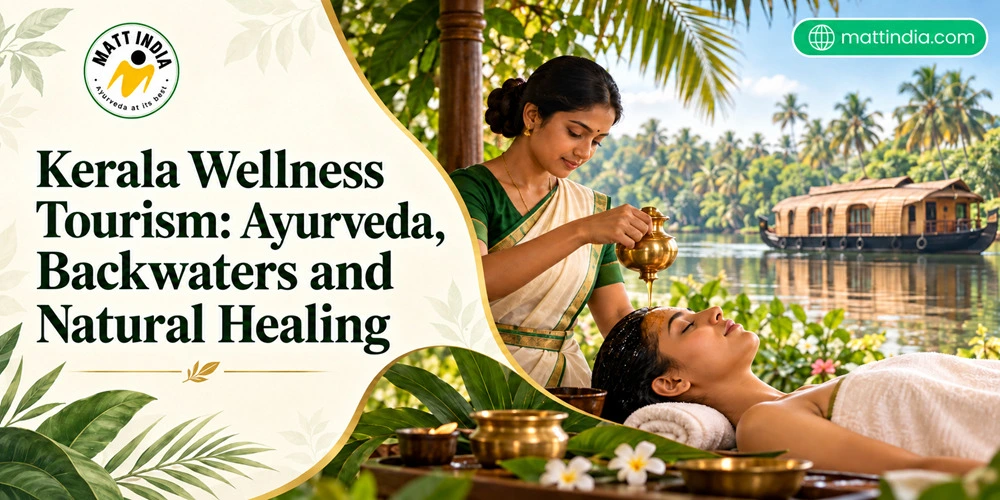
Kerala Wellness Tourism: Ayurveda, Backwaters and Natural Healing. Kerala has become a popular destination for travellers who want more than sightseeing. Instead of rushing between attractions, many visitors now prefer holidays that support relaxation, healthy routines and personal wellbeing. This is where Kerala wellness tourism offers something special. The state combines traditional Ayurveda, peaceful backwaters, green landscapes, yoga, nourishing food and nature-based experiences in one destination.
Moreover, Kerala’s natural surroundings create a calm setting for a wellness break. Its beaches, forests, hills and waterways provide different environments where visitors can slow down and reconnect with themselves. Kerala Tourism also promotes Ayurveda, yoga retreats and wellness resorts as important parts of the state’s tourism experience.
Why Kerala Is Ideal for Wellness Tourism
Wellness is not only about spa treatments. It also involves sleep, food, movement, relaxation and mental balance. Therefore, Kerala wellness tourism takes a broader approach by combining traditional practices with peaceful travel experiences.
The state has a strong connection with Ayurveda and natural healing. At the same time, its tropical environment gives travellers opportunities to spend time outdoors. A quiet morning beside a lake, a gentle yoga session, a nourishing Ayurvedic meal or a walk through a green landscape can make a holiday feel very different from a normal sightseeing trip.
Furthermore, many wellness centres operate in scenic locations, allowing visitors to enjoy treatments while staying close to nature.
Ayurveda: The Heart of Kerala Wellness
Kerala Ayurveda remains one of the biggest reasons wellness travellers choose the state. Ayurveda focuses on maintaining balance and supporting overall wellbeing through traditional approaches involving diet, lifestyle, herbal preparations and therapies.
Kerala has developed a strong reputation for Ayurvedic practices over generations. Kerala Tourism describes Ayurveda as an ancient holistic system concerned with health and wellbeing, while the state offers dedicated Ayurveda centres and wellness retreats.
Depending on individual needs, an Ayurvedic programme may include:
- Ayurvedic massage
- Abhyanga
- Shirodhara
- Herbal therapies
- Yoga and meditation
- Traditional dietary guidance
- Panchakarma-based programmes under professional supervision
However, visitors should not select intensive treatments simply because they are popular. A qualified Ayurvedic practitioner should assess individual needs and recommend suitable therapies.
The Role of Panchakarma in Wellness
Panchakarma in Kerala attracts visitors who want a more structured Ayurvedic experience. It is traditionally associated with specialised Ayurvedic procedures and requires professional assessment and supervision.
Rather than treating Panchakarma like a regular spa package, travellers should view it as a personalised Ayurvedic programme. The duration, therapies and preparation can differ from person to person.
Consequently, anyone considering Panchakarma should choose a reputable centre with qualified practitioners. Kerala Tourism has a classification system for Ayurveda centres, including Ayur Silver, Ayur Gold and Ayur Diamond categories, designed around defined facilities and service standards.
Kerala Backwaters and Mental Relaxation
The Kerala backwaters provide another important part of the wellness experience. Places such as Alleppey, Kumarakom and surrounding waterways offer a slower pace that feels naturally calming.
A houseboat journey allows travellers to watch villages, coconut palms, birds and everyday life along the waterways. Instead of following a packed sightseeing schedule, visitors can simply enjoy the changing scenery.
Additionally, backwater destinations can complement an Ayurvedic retreat. For example, Kerala Tourism highlights wellness experiences around Kumarakom, where visitors can combine backwater surroundings with traditional Ayurveda.
This combination is one reason Ayurveda and backwaters in Kerala work so well together. One supports a structured wellness routine, while the other encourages rest and quiet observation.
Related Articles:
» Why Kerala is the Best Destination for Ayurveda Treatments
» Ayurvedic Treatments for Back Pain and Spine Health
» Ayurveda for Skin: Natural Treatments for Radiant Skin
» How Ayurveda Helps You Achieve Mental Clarity and Peace?
» Ayurveda Treatment for Stress, Digestion and Overall Wellness
Natural Healing Through Kerala's Landscapes
Nature itself plays an important role in a wellness holiday. Kerala offers beaches, forests, hills, rivers, waterfalls and backwaters within a relatively compact geographical area.
Travellers can therefore create different types of wellness experiences. Someone seeking silence may prefer a forest or hill retreat. Another visitor may enjoy the sea breeze at Kovalam or Varkala. Meanwhile, Kumarakom and Alleppey suit travellers who prefer peaceful water-based surroundings.
Moreover, spending time outdoors can encourage simple healthy habits such as walking, breathing fresh air, reducing screen time and maintaining a slower daily routine.
Yoga and Meditation in Kerala
Yoga and meditation in Kerala naturally complement Ayurveda. Many wellness retreats include gentle yoga, breathing exercises and meditation as part of their programmes.
For beginners, a short daily session can be enough to introduce a calmer routine. Experienced practitioners may prefer longer retreats with structured schedules.
Most importantly, yoga should match the visitor’s ability. Beginners should avoid forcing difficult postures simply because they appear impressive. A trained instructor can help create a safer and more comfortable practice.
Ayurvedic Food and Healthy Eating
Food also contributes to the Kerala wellness experience. Traditional Kerala cuisine uses ingredients such as coconut, vegetables, rice, spices and herbs. Ayurvedic programmes may provide personalised meals based on the recommendations of an Ayurvedic practitioner.
Instead of focusing only on restrictive diets, wellness travel can encourage mindful eating. Eating slowly, choosing fresh foods and maintaining regular meal timings can make the experience more balanced.
Of course, dietary needs vary. Visitors with allergies, medical conditions or specific dietary restrictions should discuss their requirements with the centre before booking.
Popular Kerala Wellness Destinations
Different parts of Kerala offer different wellness experiences:
| Destination | Wellness Experience |
|---|---|
| Kumarakom | Backwaters, Ayurveda and nature |
| Alleppey | Houseboats and peaceful waterways |
| Kovalam | Ayurveda, beach relaxation and yoga |
| Varkala | Beach, yoga and wellness retreats |
| Thekkady | Forest surroundings and nature-based relaxation |
| Wayanad | Hills, greenery and quiet retreats |
Kerala Tourism maintains information on approved Ayurveda centres, with classified facilities located across several districts. Therefore, travellers can research recognised options before choosing a wellness programme.
How to Choose an Ayurveda Wellness Retreat
Choosing the right retreat matters because wellness programmes can vary significantly. First, check whether the centre has appropriately qualified Ayurvedic professionals. Next, understand what the package actually includes.
Consider these points before booking:
- Practitioner consultation
- Treatment duration
- Type of Ayurvedic therapies
- Accommodation standards
- Food and dietary options
- Yoga or meditation sessions
- Emergency and medical support
- Centre accreditation or classification
- Treatment costs
- Reviews and service reputation
Also, ask questions before making payment. A genuine wellness provider should explain the programme clearly rather than promising unrealistic results.
Benefits of Combining Ayurveda with Nature
The biggest strength of Kerala natural healing tourism lies in its combination of experiences. Ayurveda can provide a structured wellness routine, while nature offers a peaceful environment around it.
For instance, a traveller might begin the morning with yoga, enjoy a healthy breakfast, attend an Ayurvedic consultation, receive a suitable therapy and spend the evening beside a backwater. Such a schedule feels less like a conventional holiday and more like a chance to reset daily habits.
Furthermore, this slower style of travel can help visitors spend more meaningful time with local culture, food and surroundings.
Planning a Kerala Wellness Holiday
A wellness holiday should not feel rushed. Ideally, travellers should leave enough time between treatments and sightseeing activities. A short trip may focus on relaxation, while a longer stay can include a structured Ayurvedic programme.
Before travelling, discuss existing health concerns and medications with qualified healthcare professionals and the Ayurvedic centre. Ayurveda should not replace necessary medical treatment or prescribed medicines.
Kerala’s wellness sector continues to receive attention from tourism and health authorities. In 2026, the Government of India highlighted Kerala’s role in Ayurveda tourism as part of broader efforts to promote Ayush-based tourism and wellness travel.
Conclusion
Kerala wellness tourism brings together Ayurveda, backwaters, yoga, healthy food and natural surroundings in a way that feels both traditional and refreshing. Instead of filling every hour with sightseeing, visitors can create space for rest, reflection and healthier routines.
From Ayurvedic wellness retreats in Kerala to peaceful houseboat journeys, the state offers many ways to experience wellbeing. Most importantly, choosing a reputable centre and following professionally recommended treatments can make the journey more comfortable and meaningful.
For travellers looking to combine traditional wellness with the beauty of nature, Kerala remains a destination where healing, culture and travel can come together naturally.
Social:
https://au.pinterest.com/pin/395261304821097582/
https://x.com/matt_india/status/2106969813021270153
https://www.linkedin.com/feed/update/urn:li:activity:7512736489018163200/
https://www.linkedin.com/feed/update/urn:li:share:7512736838894133248/

No comments:
Post a Comment