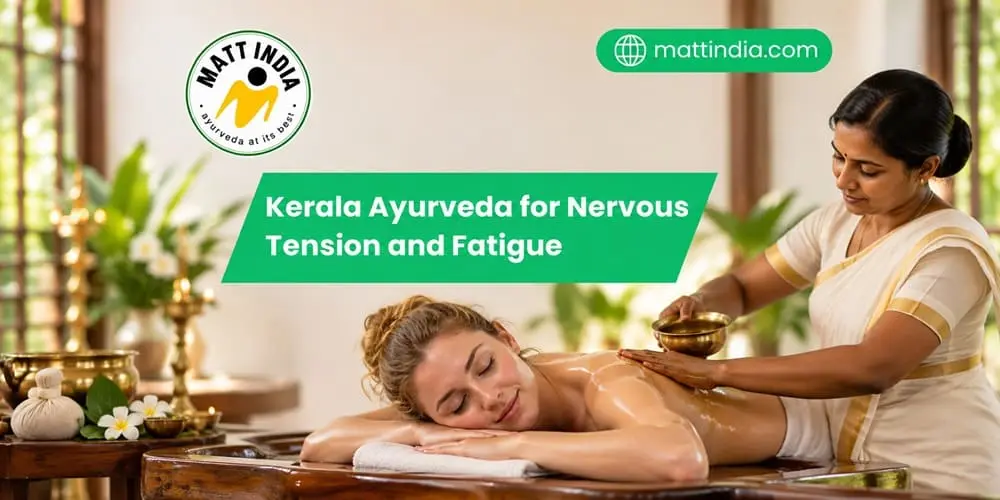
Kerala Ayurveda for Nervous Tension and Fatigue. Constant work pressure, irregular sleep, and daily responsibilities can leave you feeling mentally exhausted and physically drained. Although occasional tiredness is common, ongoing fatigue and nervous tension can affect your concentration, mood, and daily routine. Therefore, many people explore traditional wellness approaches, including Kerala Ayurveda for nervous tension and fatigue, to support relaxation and restore a healthier lifestyle.
At MATT INDIA AYURVEDA, the focus of this topic is on understanding how traditional Ayurvedic practices may support relaxation, healthy routines, and overall well-being. Kerala has a long-standing Ayurvedic tradition that includes herbal preparations, therapeutic massages, dietary guidance, and personalised lifestyle practices. When selected appropriately, these approaches may complement conventional care and help people manage everyday stress more effectively.
Understanding Nervous Tension and Fatigue
Nervous tension often appears when the mind struggles to cope with continuous pressure. You may experience restlessness, irritability, difficulty concentrating, or trouble falling asleep. Meanwhile, fatigue can make even simple activities feel demanding. Some people notice both problems at once, particularly when stress disrupts their sleep or daily habits.
Several factors may contribute to these concerns, including:
Long working hours and mental pressure.
Poor sleep quality or an irregular sleep schedule.
Skipping meals or following an unbalanced diet.
Limited physical activity and excessive screen time.
Emotional strain and insufficient relaxation.
Underlying medical conditions, including anaemia or thyroid problems.
However, nervous tension and fatigue do not always have the same cause. Persistent tiredness can sometimes indicate a medical condition rather than ordinary stress. For this reason, a healthcare professional should assess symptoms that continue, worsen, or interfere with everyday activities.
How Kerala Ayurveda Approaches Stress and Fatigue
Moreover, treatment recommendations should match the person's health needs and medical history. Some people may benefit from relaxation practices and gentle massage, while others may need dietary changes or professional support for sleep difficulties.
Traditional Ayurveda describes balance through the three doshas: Vata, Pitta, and Kapha. Practitioners use this framework to guide individualised care. Nevertheless, these concepts belong to the traditional Ayurvedic system and should not replace evidence-based medical assessment or diagnosis.
Ayurvedic Treatments That May Support Relaxation
1. Abhyanga: Traditional Ayurvedic Oil Massage
Furthermore, a comfortable massage environment may help some people unwind after a demanding day. However, massage does not treat every cause of fatigue or anxiety, and its suitability depends on the individual's health. A qualified practitioner should check for skin conditions, injuries, allergies, and other contraindications before treatment.
2. Shirodhara: A Traditional Relaxation Therapy
The quiet setting and structured treatment may provide a restful experience for some individuals. Nevertheless, strong scientific evidence that Shirodhara directly treats chronic fatigue, anxiety disorders, or nervous system conditions remains limited. Therefore, consider it a complementary wellness option rather than a substitute for prescribed treatment.
3. Herbal Preparations and Personalised Ayurvedic Guidance
Ayurveda includes a range of traditional herbal preparations. Depending on the person's needs, a qualified practitioner may discuss particular herbs as part of a wider wellness plan.
However, Ayurvedic herbal medicines are not automatically safe simply because they are natural. Some products may interact with prescription medicines, affect the liver or kidneys, or contain contaminants and undeclared ingredients. Consequently, consult a qualified healthcare professional before taking herbs, especially if you have an existing medical condition, take medication, or are pregnant or breastfeeding.
Never start multiple herbal products together without professional advice. Also, avoid stopping prescribed medication in favour of an alternative treatment.
Related Articles:
» Abhyanga Massage in Kerala: Benefits for International Tourists
» Ayurveda Rejuvenation Therapy in Kerala: Treatments and Benefits
» How Abhyanga Helps Reduce Stress and Fatigue
» Ayurveda Rejuvenation Therapy: Benefits, Treatments, and Healing Process
» Ayurvedic Secrets to Overcoming Anxiety and Stress Naturally
Daily Ayurvedic Lifestyle Practices for Better Well-Being
Along with professional guidance, simple lifestyle changes can help you manage everyday tension and support healthy energy levels. In fact, consistent habits often matter more than occasional wellness sessions.
Maintain a Regular Sleep Schedule
Quality sleep allows your body and mind to recover. Therefore, try to sleep and wake up at similar times every day. Reduce screen use before bedtime, keep your bedroom comfortable, and avoid heavy meals late at night. Additionally, limit caffeine in the afternoon if it affects your sleep.
Practise Yoga and Gentle Breathing
Gentle yoga, meditation, and mindful breathing can help create moments of calm during a busy day. Start with a few minutes and increase the duration according to your comfort. Furthermore, regular walking and light physical activity may improve sleep and support general well-being.
If breathing exercises make you dizzy or uncomfortable, stop and return to normal breathing. People with persistent anxiety may also benefit from evidence-based psychological support, such as cognitive behavioural therapy.
Choose Balanced, Regular Meals
Your body needs sufficient nutrients to maintain energy. Include vegetables, fruits, whole grains, protein-rich foods, and healthy fats in your daily meals. Similarly, drink enough water and avoid relying on excessive caffeine or sugary drinks to overcome tiredness.
If fatigue continues despite healthy eating and adequate sleep, consult a healthcare professional rather than assuming that you need an Ayurvedic detox or tonic.
Who May Consider Kerala Ayurvedic Wellness?
People experiencing everyday stress, muscular tension, or difficulty relaxing may consider selected Kerala Ayurvedic wellness therapies as part of a broader self-care routine. Nevertheless, a suitable approach depends on individual needs, medical history, and treatment goals.
Ayurveda may complement conventional care, but research supporting many specific Ayurvedic treatments for nervous tension and fatigue remains limited. Product quality also matters because certain preparations may contain harmful heavy metals. Therefore, choose qualified practitioners and reputable products, and discuss any proposed treatment with your healthcare provider.
Seek medical advice if fatigue persists for several weeks, repeatedly interrupts daily activities, or occurs with unexplained weight changes, breathlessness, dizziness, or other concerning symptoms. Sudden severe weakness, chest pain, or difficulty breathing requires urgent medical attention.
Conclusion
Kerala Ayurveda for nervous tension and fatigue offers a traditional approach that combines relaxation therapies, lifestyle guidance, and individualised care. Practices such as Abhyanga, Shirodhara, gentle yoga, and regular sleep routines may help some people create a calmer daily rhythm. However, results vary, and these methods cannot replace appropriate medical care.
At MATT INDIA AYURVEDA, readers can explore the principles of traditional Ayurvedic wellness while making informed choices about their health. Ultimately, combining safe complementary practices with balanced nutrition, adequate rest, physical activity, and professional medical advice provides a sensible foundation for long-term well-being.
Social:
https://in.pinterest.com/pin/395261304821251567/
https://x.com/matt_india/status/2114619694682611720
https://www.linkedin.com/feed/update/urn:li:activity:7520397171482017792/
https://www.linkedin.com/feed/update/urn:li:share:7520397537678364672/

No comments:
Post a Comment