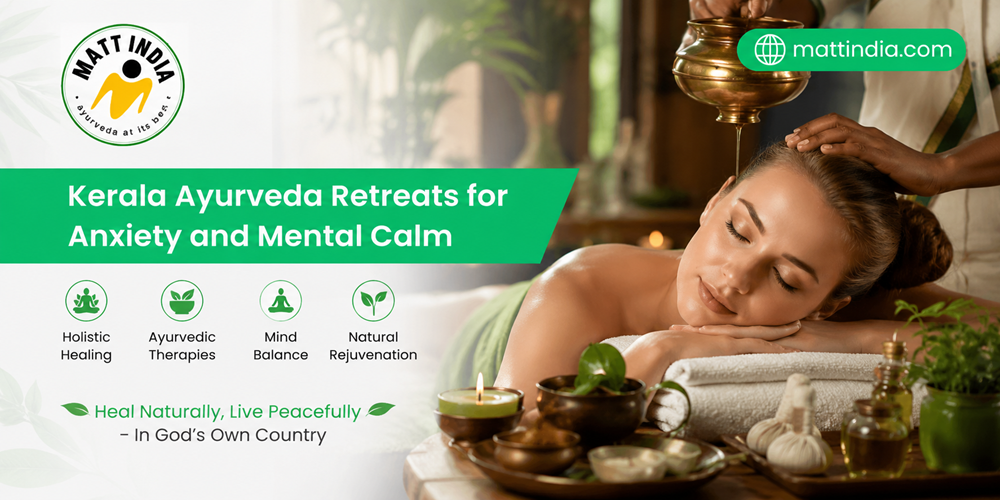
Kerala Ayurveda Retreats for Anxiety and Mental Calm. Modern life rarely slows down. Work pressure, constant notifications, poor sleep, long commutes and personal responsibilities can leave the mind feeling overloaded. Consequently, many people are looking for natural ways to step away from daily stress and create more peaceful routines.
Kerala Ayurveda retreats for anxiety and mental calm offer a structured environment where traditional Ayurveda, yoga, meditation, nourishing food and rest come together. Rather than treating a retreat like an ordinary holiday, visitors can use the time to reduce distractions, reconnect with healthy routines and focus on overall wellbeing.
Kerala has a long-standing association with Ayurveda, while its greenery, backwaters, beaches and quieter surroundings can provide a naturally relaxing setting. At MATT INDIA AYURVEDA, the focus can extend beyond a single therapy towards lifestyle, routine, nutrition and mind-body wellbeing.
Important: Ayurveda and wellness retreats can complement appropriate mental-health care, but they should not replace professional treatment for severe anxiety, depression, panic attacks or other mental-health conditions.
Why Choose Kerala for an Ayurveda Retreat?
Kerala offers a distinctive combination of traditional wellness practices and a peaceful natural environment. For many visitors, simply stepping away from a busy schedule can make a meaningful difference to how they feel.
An Ayurveda retreat in Kerala may provide a daily rhythm involving:
- Ayurvedic consultations
- Traditional therapies
- Yoga
- Pranayama
- Meditation
- Relaxation practices
- Nutritious meals
- Adequate rest
- Nature-based activities
The Ministry of AYUSH describes yoga as a practice that supports harmony between mind and body and notes that practices such as asanas, pranayama and meditation can help manage daily stress and its consequences.
Therefore, a well-designed retreat can give visitors something that ordinary holidays often miss: time, structure and fewer distractions.
Understanding Anxiety Through an Ayurvedic Perspective
Ayurveda approaches wellbeing as an interaction between the body, mind, lifestyle and environment. Traditional Ayurvedic practice discusses three doshas — Vata, Pitta and Kapha — and considers individual constitution when planning wellness routines.
However, Ayurveda does not follow a one-size-fits-all approach. An Ayurvedic practitioner may consider your:
- Sleep pattern
- Eating habits
- Digestion
- Daily routine
- Energy levels
- Stress levels
- Physical constitution
- Existing health concerns
- Lifestyle habits
Based on this assessment, the practitioner can recommend suitable wellness practices.
For this reason, choosing a retreat that provides an individual consultation can be more useful than selecting a programme simply because it advertises a particular treatment.
How an Ayurveda Retreat Can Support Mental Calm
A retreat does not need to promise a quick cure to be valuable. Instead, it can create conditions that encourage relaxation and healthier habits.
1. A Structured Daily Routine
When life becomes hectic, meals, sleep and exercise can become irregular. A retreat introduces a predictable schedule.
For example, your day might include morning yoga, breakfast, an Ayurvedic consultation or therapy, quiet time, lunch and an evening meditation session.
That consistency can make it easier to step away from chaotic routines.
2. Yoga and Gentle Movement
Yoga combines movement, breathing and awareness. Moreover, it can be adapted for beginners as well as experienced practitioners.
Gentle yoga may help visitors focus on their breathing and physical sensations rather than constantly thinking about work or everyday responsibilities.
AYUSH guidance highlights yoga practices such as yogasanas, pranayama and dhyana (meditation) in relation to stress management.
3. Pranayama and Breathing Practices
Breathing exercises can become a simple part of a daily relaxation routine.
Under appropriate guidance, pranayama may encourage slower, more mindful breathing. Consequently, visitors can learn techniques that they may continue practising after returning home.
4. Meditation and Quiet Time
Meditation can provide a break from constant stimulation. Even a short guided session can encourage people to sit quietly, observe their breathing and reduce distractions.
Many Kerala wellness programmes combine Ayurveda, yoga and meditation rather than relying on one activity alone.
5. Ayurvedic Therapies
Depending on the practitioner's assessment and the retreat programme, traditional therapies may include treatments such as Abhyanga or Shirodhara.
However, therapies should be selected by qualified practitioners according to the individual's needs. Visitors should avoid choosing intensive treatments independently, especially when they have existing medical conditions or take regular medicines.
The Role of Ayurvedic Food
Food forms an important part of many Kerala Ayurveda wellness retreats.
Instead of heavy restaurant meals and irregular eating, retreats may provide freshly prepared vegetarian or traditionally inspired meals according to the programme.
A consistent meal schedule can also encourage better lifestyle habits. Some retreats specifically offer sattvic-style vegetarian food as part of their wellness programmes.
The goal should not be extreme dieting. Rather, it is about eating mindfully, maintaining regular meals and giving your body nourishing food while you rest.
Nature and Mental Relaxation
Kerala's natural surroundings add another dimension to the retreat experience.
Depending on the location, visitors may spend time around:
- Coconut groves
- Backwaters
- Tropical gardens
- Beaches
- Hills
- Forested areas
- Quiet village landscapes
A slower environment can make it easier to disconnect from phones, work emails and constant notifications. Therefore, choosing a retreat with peaceful surroundings can complement the scheduled wellness activities.
What Can a Typical Retreat Include?
Every centre has its own approach, so programmes differ. However, a wellness retreat may include several of the following:
| Retreat Element | Possible Purpose |
|---|---|
| Ayurvedic consultation | Understand individual wellness needs |
| Abhyanga | Traditional oil-based therapy |
| Shirodhara | Traditional relaxation-focused therapy |
| Yoga | Movement, flexibility and mindful practice |
| Pranayama | Guided breathing practice |
| Meditation | Quiet attention and relaxation |
| Ayurvedic meals | Structured, nourishing eating |
| Nature time | Reduce daily stimulation |
| Lifestyle guidance | Develop sustainable routines |
Some current Kerala programmes combine personalised Ayurvedic consultations with daily therapies, yoga, pranayama, meditation and vegetarian meals.
Related Articles:
» Why Kerala is the Best Destination for Ayurveda Treatments
» Ayurvedic Treatments for Back Pain and Spine Health
» Ayurveda for Skin: Natural Treatments for Radiant Skin
» How Ayurveda Helps You Achieve Mental Clarity and Peace?
» Ayurveda Treatment for Stress, Digestion and Overall Wellness
How Long Should You Stay?
There is no universal retreat duration for everyone.
A short stay may provide an introduction to Ayurveda and help you step away from a busy routine. Meanwhile, longer programmes can provide more time to establish consistent habits.
| Stay Length | May Suit |
|---|---|
| 3–5 days | Short relaxation break |
| 7 days | Introductory wellness reset |
| 10–14 days | Deeper routine and relaxation focus |
| 21+ days | Structured programmes requiring longer supervision |
These are general planning categories rather than medical recommendations. Actual programme duration should depend on the retreat, practitioner advice and your personal circumstances.
What Should You Look for in a Kerala Ayurveda Retreat?
Not every wellness retreat offers the same experience. Therefore, compare programmes carefully before booking.
Look for:
Qualified Practitioners
Ask whether an Ayurvedic doctor or appropriately qualified practitioner assesses guests before recommending therapies.
Personalised Programmes
A personalised approach is preferable to giving every visitor exactly the same treatment schedule.
Clear Treatment Information
The centre should explain what therapies it provides and who should avoid them.
Healthy Food
Check the type of meals included and whether the retreat can accommodate genuine dietary requirements.
Comfortable Accommodation
Rest is an important part of a wellness break, so the accommodation should support good sleep and privacy.
Balanced Activities
A programme that combines treatment, movement, meditation, rest and lifestyle guidance can provide a more complete experience.
Kerala Ayurveda Retreats for Busy Professionals
Professionals often struggle to disconnect from work. Even during holidays, laptops and mobile phones can keep the mind occupied.
A structured Ayurveda retreat for stress relief can create a clear boundary between professional responsibilities and personal time.
You can leave the usual routine behind temporarily, follow a set schedule and spend time focusing on yourself. Furthermore, learning simple breathing, meditation and lifestyle techniques may help you maintain some of those habits after returning home.
What About Severe Anxiety?
This point deserves attention.
An Ayurveda retreat may provide relaxation and complementary wellbeing support, but severe or persistent anxiety requires appropriate professional assessment and care.
If anxiety interferes with work, sleep, relationships or daily activities, speak with a qualified mental-health professional. If you experience thoughts of self-harm or feel unable to stay safe, seek urgent local medical or emergency support.
A responsible retreat should respect existing medical treatment rather than encouraging guests to stop prescribed medication without professional advice.
Why Choose MATT INDIA AYURVEDA?
At MATT INDIA AYURVEDA, the retreat experience can focus on the broader connection between lifestyle, relaxation and traditional Ayurvedic wellbeing.
Instead of viewing mental calm as a single treatment, a holistic programme can bring together Ayurvedic therapies, yoga, breathing practices, nourishing food, rest and mindful routines.
This approach is particularly suitable for people who want to step away from hectic schedules and spend meaningful time focusing on their overall wellbeing.
Tips for Making Your Retreat More Beneficial
Before travelling, consider reducing your workload where possible. Also, inform colleagues and family that you will have limited access to your phone.
During the retreat:
- Follow the recommended schedule.
- Keep digital distractions low.
- Drink enough water according to your practitioner's advice.
- Attend yoga or meditation sessions consistently.
- Eat meals mindfully.
- Give yourself enough time to sleep.
- Tell your practitioner about existing health concerns.
- Avoid self-prescribing Ayurvedic medicines.
- Don't rush through therapies.
- Continue suitable habits after returning home.
Small changes often become easier when you practise them consistently.
Conclusion
Kerala Ayurveda retreats for anxiety and mental calm provide an opportunity to slow down, reduce everyday distractions and reconnect with healthier routines. Through a combination of Ayurvedic therapies, yoga, pranayama, meditation, nourishing food and peaceful surroundings, a retreat can support relaxation and overall wellbeing.
Most importantly, choose a programme that values individual assessment rather than promising instant results. Kerala's traditional wellness culture and natural environment can create a memorable setting for a personal reset.
At MATT INDIA AYURVEDA, the focus can go beyond a temporary break by encouraging practical routines that support a calmer and more balanced lifestyle long after the retreat ends.
Social:
https://in.pinterest.com/pin/395261304820827557/
https://x.com/matt_india/status/2093283882804433044
https://www.linkedin.com/feed/update/urn:li:share:7499056265596268544/
https://www.linkedin.com/feed/update/urn:li:share:7499056616449658881/

No comments:
Post a Comment