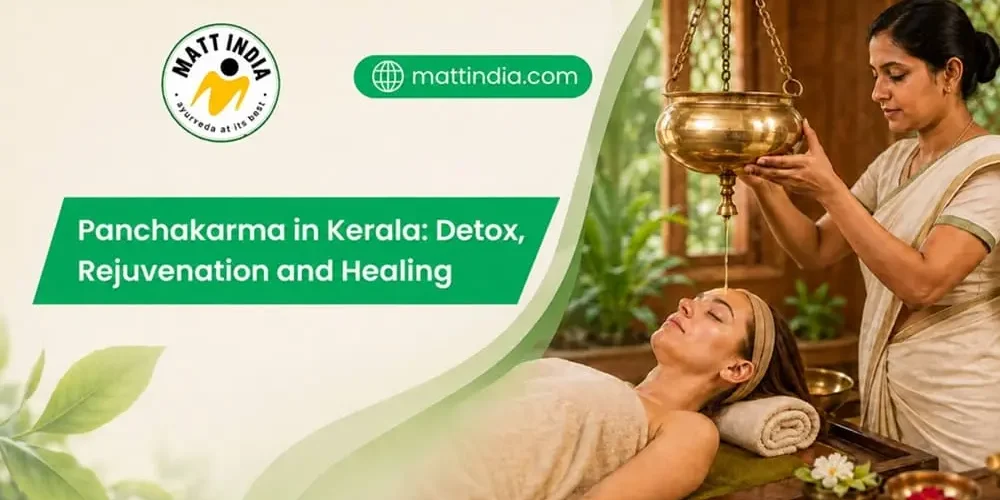
Panchakarma in Kerala: Detox, Rejuvenation and Healing. Panchakarma in Kerala has become a popular choice for people looking to experience traditional Ayurveda in a calm, natural setting. More than a spa programme, Panchakarma is a structured Ayurvedic approach that traditionally combines preparation, therapeutic procedures and post-treatment care.
Kerala has a long-standing association with Ayurveda, and its tourism authorities promote the state as a destination for Ayurvedic wellness and Panchakarma experiences.
However, it is important to understand what Panchakarma actually involves. It is not simply an oil massage or a quick “detox”. Instead, a traditional programme can involve several stages, personalised therapies, dietary guidance, rest and lifestyle recommendations.
At MATT INDIA AYURVEDA, the focus can be placed on understanding the individual before selecting suitable Ayurvedic therapies. After all, every person has different needs, routines and health considerations.
What Is Panchakarma in Ayurveda?
The word Panchakarma refers to a group of five therapeutic actions in traditional Ayurveda. Kerala Tourism describes the traditional five as Vamana, Virechana, Vasti, Nasya and Raktamokshana. However, not every person receives all five procedures. The treatment plan depends on the individual's assessment and the practitioner's judgement.
In simple terms, Panchakarma aims to follow a structured process rather than offering one isolated therapy.
Therefore, people often experience Panchakarma as a complete wellness programme involving:
- Ayurvedic assessment
- Preparatory therapies
- Personalised treatments
- Diet guidance
- Rest and relaxation
- Post-treatment care
- Lifestyle recommendations
The traditional Ayurvedic framework describes Panchakarma as a rejuvenation and purification approach.
Why Kerala Is Known for Panchakarma
Kerala offers a distinctive environment for Ayurvedic wellness. Its tropical climate, greenery, traditional food culture and established Ayurveda centres have helped make it a recognised destination for people seeking these therapies.
Moreover, Kerala Tourism highlights Ayurvedic retreats and treatment centres across the state, including government and privately operated facilities.
For visitors, this combination of Ayurvedic treatment and a peaceful environment can make the experience feel more complete.
Nevertheless, the location alone does not determine the quality of treatment. The qualifications of practitioners, hygiene standards, individual assessment and appropriate supervision remain important.
The Three Main Stages of Panchakarma
A traditional Panchakarma programme generally follows three broad stages: Purvakarma, Pradhanakarma and Paschatkarma.
1. Purvakarma – Preparation
Purvakarma prepares the body for the main therapeutic stage. According to Kerala Tourism, this stage may include techniques such as Pachana, Snehana and Swedana.
Snehana refers to oleation, while Swedana involves therapeutic sweating. Depending on the individual programme, practitioners may use herbal oils, internal preparations or other traditional methods.
Importantly, preparation should not be rushed. The practitioner first considers the person's condition and suitability for treatment.
2. Pradhanakarma – Main Therapy
Pradhanakarma refers to the principal therapeutic stage. Traditional Panchakarma procedures may include Vamana, Virechana, Vasti or Nasya, depending on the person's Ayurvedic assessment.
However, these are not treatments that people should attempt independently.
Instead, trained practitioners should determine whether a particular procedure is appropriate, how it should be performed and how closely the person needs to be monitored.
3. Paschatkarma – Recovery and Rebuilding
The final stage focuses on returning gradually to normal routines. Kerala Tourism describes Paschatkarma as involving a rehabilitation approach with suitable diet, rest and lifestyle changes.
This stage matters because the programme does not simply end when the main therapy finishes.
A carefully planned transition can include light meals, adequate rest and gradual return to normal activities.
What Are the Five Traditional Panchakarma Procedures?
The traditional five procedures are often explained as follows:
| Procedure | Traditional Description |
|---|---|
| Vamana | Therapeutic emesis |
| Virechana | Therapeutic purgation |
| Vasti | Therapeutic enema |
| Nasya | Administration of selected medicines through the nasal route |
| Raktamokshana | Traditional bloodletting procedure |
Kerala Tourism identifies these five procedures while also noting that Raktamokshana is generally reserved for specific circumstances rather than routine Panchakarma.
Therefore, the phrase “five therapies” does not mean every guest should receive all five.
Panchakarma and Rejuvenation
Ayurvedic rejuvenation therapy often focuses on restoring balance, supporting relaxation and encouraging healthier routines after the cleansing phase.
Kerala Tourism describes Rasayana Chikitsa as a traditional rejuvenation approach intended to revitalise the body and support health.
Consequently, some Panchakarma programmes include rejuvenation-focused practices after the main procedures.
People may choose these programmes because they want to:
- Take a break from demanding routines
- Experience traditional Ayurvedic care
- Support relaxation
- Establish healthier daily habits
- Explore personalised wellness practices
- Combine treatment with restorative rest
However, claims that Panchakarma can “remove all toxins” or cure every illness should be treated cautiously. Modern scientific evidence for Ayurveda remains limited for many health conditions. The US National Center for Complementary and Integrative Health notes that research on Ayurveda has produced some promising findings in specific areas, but many studies remain small or have methodological limitations.
What Happens During a Panchakarma Programme?
A typical programme may look different from one centre to another. Still, the overall structure can include:
Initial consultation → Personalised preparation → Main therapies → Rest and diet → Post-treatment guidance
The duration also varies. Kerala Tourism notes that Panchakarma is often conducted over a longer programme and mentions 21 days as a usual duration in some Kerala settings, while centres may customise programmes.
| Stage | Main Focus | Typical Considerations |
| Consultation | Individual assessment | Health history and suitability |
| Purvakarma | Preparation | Oils, herbs, diet and other therapies |
| Pradhanakarma | Main procedures | Selected according to individual needs |
| Paschatkarma | Recovery | Diet, rest and gradual routine |
| Follow-up | Lifestyle | Ongoing wellness guidance |
These stages are illustrative rather than a fixed prescription. A qualified practitioner should decide the actual programme.
Related Articles:
» Why Kerala is the Best Destination for Ayurveda Treatments
» Ayurvedic Treatments for Back Pain and Spine Health
» Ayurveda for Skin: Natural Treatments for Radiant Skin
» How Ayurveda Helps You Achieve Mental Clarity and Peace?
» Ayurveda Treatment for Stress, Digestion and Overall Wellness
Benefits People Commonly Seek
People often explore Panchakarma treatment in Kerala for its traditional focus on whole-person wellbeing.
Potential wellness goals may include:
- Relaxation and stress management
- Supporting healthy routines
- Experiencing traditional Ayurvedic therapies
- Encouraging mindful eating
- Improving the sense of physical comfort
- Creating time for rest
- Supporting general wellbeing
However, these should be understood as wellness goals rather than guaranteed medical outcomes.
Panchakarma should not replace necessary conventional medical care. NCCIH specifically advises people not to postpone seeing a conventional healthcare provider because they are using Ayurvedic medicine.
Is Panchakarma Suitable for Everyone?
No. Panchakarma is not automatically suitable for every person.
A proper assessment should happen before treatment, especially for people who take prescription medicines or have existing health conditions.
Pregnant or breastfeeding people, older adults, children and individuals with significant medical conditions may need additional medical advice before considering particular Ayurvedic products or procedures.
Safety also depends on the exact therapy and product. NCCIH warns that some Ayurvedic preparations can contain potentially toxic metals such as lead, mercury or arsenic.
Therefore, choosing a reputable centre and discussing medicines, allergies and health conditions openly is essential.
How to Prepare for Panchakarma in Kerala
If you are planning Panchakarma in Kerala, preparation can make the experience easier.
First, share your complete health history with the practitioner. Also, mention any medicines or supplements you currently take.
Then, ask questions about:
- Treatment duration
- Daily schedule
- Diet requirements
- Therapies included
- Practitioner qualifications
- Accommodation arrangements
- Follow-up care
- Possible risks or side effects
Furthermore, plan enough time for rest. A Panchakarma programme is not ideal if you expect to spend every day sightseeing or following a busy travel schedule.
Why Personalisation Matters
One of the most important aspects of traditional Panchakarma is individualisation.
Instead of giving every person the same oil, treatment or diet, an Ayurvedic practitioner should consider the person's constitution, current condition, lifestyle and treatment goals.
At MATT INDIA AYURVEDA, personalised planning can help create a more focused experience. The aim should be to combine traditional Ayurvedic principles with sensible care and realistic wellness expectations.
Ultimately, a good Panchakarma programme is not about doing as many treatments as possible. It is about choosing appropriate therapies and allowing enough time for the body and mind to rest.
Panchakarma Beyond the Treatment Room
The biggest value of an Ayurvedic wellness programme may continue after you return home.
For example, you may start eating more mindfully, maintain a consistent sleep routine, practise gentle movement or make more time for relaxation.
In this way, Panchakarma and rejuvenation can become an opportunity to reconsider everyday habits rather than a one-time wellness experience.
That is especially useful because lasting wellbeing usually depends on consistent lifestyle choices, not a single treatment session.
Conclusion
Panchakarma in Kerala offers an opportunity to experience one of Ayurveda's best-known traditional therapeutic approaches in a setting closely associated with Ayurvedic wellness.
The process traditionally includes preparation, selected therapeutic procedures and post-treatment care. Moreover, many programmes combine these therapies with dietary guidance, rest and lifestyle recommendations.
Still, Panchakarma should be approached responsibly. It is not a universal cure, and scientific evidence for many Ayurvedic health claims remains limited. Therefore, professional assessment, safe practices and realistic expectations matter.
For anyone considering Ayurvedic detox and rejuvenation in Kerala, a personalised programme at a reputable centre can provide a structured way to explore traditional wellness practices while taking time away from the pressures of everyday life.
Social:
https://x.com/matt_india/status/2087824369091543090
https://www.linkedin.com/feed/update/urn:li:share:7493591086301450240/
https://www.linkedin.com/feed/update/urn:li:share:7493591680227467265/
