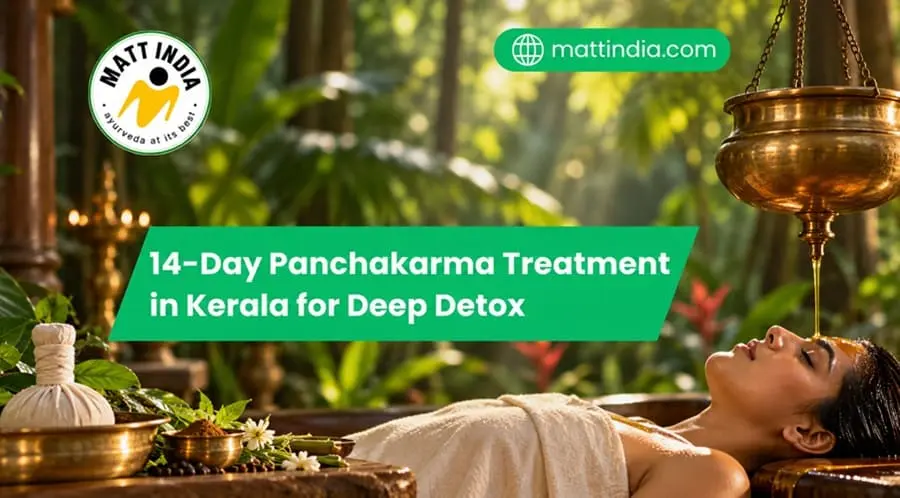
14-Day Panchakarma Treatment in Kerala for Deep Detox. A 14-Day Panchakarma Treatment in Kerala can be a meaningful choice for travellers who want more than a short Ayurvedic massage or wellness holiday. Two weeks gives enough time to begin with a proper consultation, prepare the body, follow selected therapies and allow time for rest afterwards. Most importantly, Panchakarma should not be treated as a quick cleanse. It is a structured Ayurvedic process that needs individual planning.
At MATT INDIA AYURVEDA, the approach focuses on understanding each guest before deciding which therapies are appropriate. This matters because Panchakarma does not follow one identical schedule for everyone. Kerala Tourism describes Panchakarma as a process involving Purvakarma, Pradhanakarma and Paschatkarma, with preparation and recovery forming an important part of the overall treatment.
What Is a 14-Day Panchakarma Programme?
A 14-day Panchakarma programme in Kerala is designed around a person's individual condition, lifestyle and treatment needs. Rather than filling every day with strong therapies, an Ayurvedic physician can divide the stay into preparation, selected main procedures and post-treatment care.
This approach is especially useful for international guests. After a long flight, the body may need some time to settle into a different climate, food pattern and daily routine. Therefore, the first few days can focus on consultation, diet and gentle preparation instead of immediately beginning intensive procedures.
At MATT INDIA AYURVEDA, 14 days is considered the minimum timeframe for offering selected Panchakarma detox sessions, while completing four or five detox procedures may require approximately 21–28 days.
Why Choose 14 Days for Panchakarma in Kerala?
A two-week stay provides a middle ground between a very short wellness break and an extended traditional programme.
For some guests, seven days simply does not leave enough room for preparation and recovery. On the other hand, not everyone can take three or four weeks away from work and family.
A 14-day Ayurvedic detox programme may therefore offer enough time to:
- Complete an initial Ayurvedic consultation
- Understand the recommended treatment approach
- Follow preparatory therapies
- Receive physician-selected Panchakarma procedures
- Maintain an appropriate Ayurvedic diet
- Rest between treatments
- Start post-treatment rejuvenation
- Receive lifestyle guidance for returning home
However, two weeks does not automatically mean that every person should receive the same treatment. The physician should decide the procedures after assessment.
Day 1–3: Consultation and Preparation
The first days are not simply waiting time. In fact, preparation forms an important part of Panchakarma.
Kerala Tourism explains that Purvakarma can include techniques such as Pachana, Snehana and Swedana and may last several days before the principal treatment.
During this stage, the Ayurvedic team may assess your current condition, digestion, sleep, lifestyle and other relevant factors. Your meals may also become lighter and easier to digest.
Depending on your individual plan, preparation can include Abhyanga, oil application, herbal steam or other supportive therapies.
For an international traveller, this stage also gives the body time to adjust. So, don't expect a packed schedule from morning to evening. Rest is part of the process too.
Related Articles:
» Why Kerala is the Best Destination for Ayurveda Treatments
» Ayurvedic Treatments for Back Pain and Spine Health
» Ayurveda for Skin: Natural Treatments for Radiant Skin
» How Ayurveda Helps You Achieve Mental Clarity and Peace?
» Ayurveda Treatment for Stress, Digestion and Overall Wellness
Day 4–9: Main Panchakarma Therapies
The middle portion of a 14-day Panchakarma treatment in Kerala may include the principal therapies selected by the Ayurvedic physician.
Traditional Panchakarma includes five classical procedures: Vamana, Virechana, Vasti, Nasya and Raktamokshana. However, this does not mean every guest receives all five. Kerala Tourism notes that Panchakarma programmes can be customised.
Depending on the assessment, the treatment plan may use selected procedures alongside supportive Ayurvedic therapies.
Some programmes may include:
- Abhyanga with warm herbal oils
- Swedana or herbal steam therapy
- Nasya
- Vasti, when clinically appropriate
- Virechana, when prescribed
- Shirodhara or other supportive therapies
- Yoga, breathing and relaxation practices
- Special Ayurvedic meals
The important point is suitability. A treatment should not be selected simply because it sounds powerful or because another guest received it.
Day 10–12: Recovery and Rejuvenation
After the main therapies, the programme gradually moves towards recovery. This part can sometimes be overlooked by travellers who expect a detox programme to finish with the final procedure.
Actually, Paschatkarma is an important stage of Panchakarma. Kerala Tourism describes it as a post-treatment regimen that can include rest, dietary guidance, exercise and lifestyle changes according to the individual's needs.
Therefore, these days may involve gentler treatments, simple meals, relaxation and reduced physical activity.
You may also receive advice about meal timing, sleep, exercise and daily habits that can be followed after returning home.
Day 13–14: Rejuvenation and Home-Care Guidance
The final two days can help you transition from the treatment environment back to your normal routine.
Instead of immediately returning to a busy schedule, guests can use this period for gentle activities, relaxation and a final consultation.
Your practitioner may explain:
- Which foods to prefer temporarily
- Which foods or habits to avoid
- How to restart regular exercise
- When to resume strenuous activities
- Which daily routines may support your wellness goals
- Whether any follow-up consultation is advisable
This guidance can be particularly helpful for international tourists because the journey home itself may involve a long flight and changes in sleeping patterns.
What Can You Expect From 14-Day Panchakarma?
People often search for Panchakarma for deep detox, but it is better to keep expectations realistic. Ayurveda uses its own traditional framework for cleansing and balancing, while modern medical evidence does not establish Panchakarma as a universal method for removing unspecified "toxins" from the body.
Instead, guests can approach the programme as a structured period of Ayurvedic care, controlled diet, therapeutic procedures, rest and lifestyle adjustment.
Some people report feeling more relaxed, lighter or refreshed after wellness programmes. However, individual experiences vary, and Panchakarma should not be promoted as a guaranteed cure for a medical condition.
Ayurvedic Food During Panchakarma
Food plays a major role during an Ayurvedic programme. The menu may be simpler than the meals an international traveller normally eats.
Depending on the individual plan, meals may include freshly prepared rice, vegetables, soups, herbal drinks and other easily digestible foods.
The purpose is not to make the guest feel hungry. Rather, the food routine supports the treatment schedule and gives digestion a break from heavy, highly processed meals.
For this reason, visitors should be ready to follow the centre's dietary instructions instead of treating the stay like a normal Kerala holiday.
Why Kerala Is Suitable for an Ayurveda Retreat
Kerala has a strong connection with Ayurveda and provides a calm setting for extended wellness stays. Visitors can combine traditional Ayurvedic care with a peaceful environment, greenery, coastal areas and a slower daily rhythm.
However, the location alone does not make a Panchakarma programme authentic. Travellers should check the qualifications of practitioners, treatment details, accommodation, hygiene standards and what the package actually includes.
Kerala's Department of Indian Systems of Medicine also identifies Panchakarma as a major Ayurvedic treatment area and describes procedures such as Abhyanga and Sweda as preparatory/supportive practices.
Is 14 Days Enough for Deep Detox?
For selected Panchakarma procedures, 14 days can provide a practical treatment window, particularly for travellers who cannot stay for three weeks or more. MATT INDIA AYURVEDA states that guests staying less than 14 days are not offered its Panchakarma sessions, while longer stays may be needed for more extensive detox procedures.
Still, longer does not always mean better. The correct duration depends on the person's condition and the treatment prescribed.
If your physician recommends 21 or 28 days, trying to compress the programme into 14 days may not be sensible. Likewise, if a shorter programme is appropriate, extending it only for marketing reasons has little value.
Plan Your 14-Day Ayurveda Journey With Care
A 14-day Panchakarma treatment in Kerala should be planned as a complete wellness journey rather than a collection of massages. Consultation, preparation, selected therapies, diet, recovery and aftercare all have a role.
At MATT INDIA AYURVEDA, international guests can discuss their requirements before planning the stay. This makes it easier to understand the likely schedule, accommodation needs, dietary routine and recommended duration before travelling to Kerala.
Most importantly, arrive with enough time in your itinerary. Don't plan a long sightseeing trip immediately after intensive treatment. Give yourself some quiet days, follow the advice provided by your practitioner and allow the experience to progress naturally.
Conclusion
A 14-Day Panchakarma Treatment in Kerala can offer international travellers dedicated time for Ayurvedic care, preparation, selected therapies, proper rest and post-treatment guidance. However, every person responds differently, so the treatment plan and duration should always follow an Ayurvedic physician’s assessment. With the right guidance, a two-week stay at MATT INDIA AYURVEDA can become a calm and structured wellness journey rather than a rushed detox experience.
Social:
https://in.pinterest.com/pin/395261304821113134/
https://x.com/matt_india/status/2107681544517320788
https://www.linkedin.com/feed/update/urn:li:activity:7513448286293229569/
https://www.linkedin.com/feed/update/urn:li:share:7513448724442861568/

No comments:
Post a Comment